


Reshaping Implant Stability: Platform Switching
In the field of dental implantology, if early implant techniques addressed the question of whether an implant can be placed securely, then platform switching technology tackles the core concerns of long‑term durability and aesthetic success.
What is platform switching?
Traditional implants use an abutment with a diameter matching that of the implant platform. In contrast, platform switching deliberately employs a smaller‑diameter abutment connected to a larger implant platform. This shifts the interface – where the implant and abutment meet – inward, away from the crestal bone margin, thereby relocating both the micro‑gap and stress concentration zones.
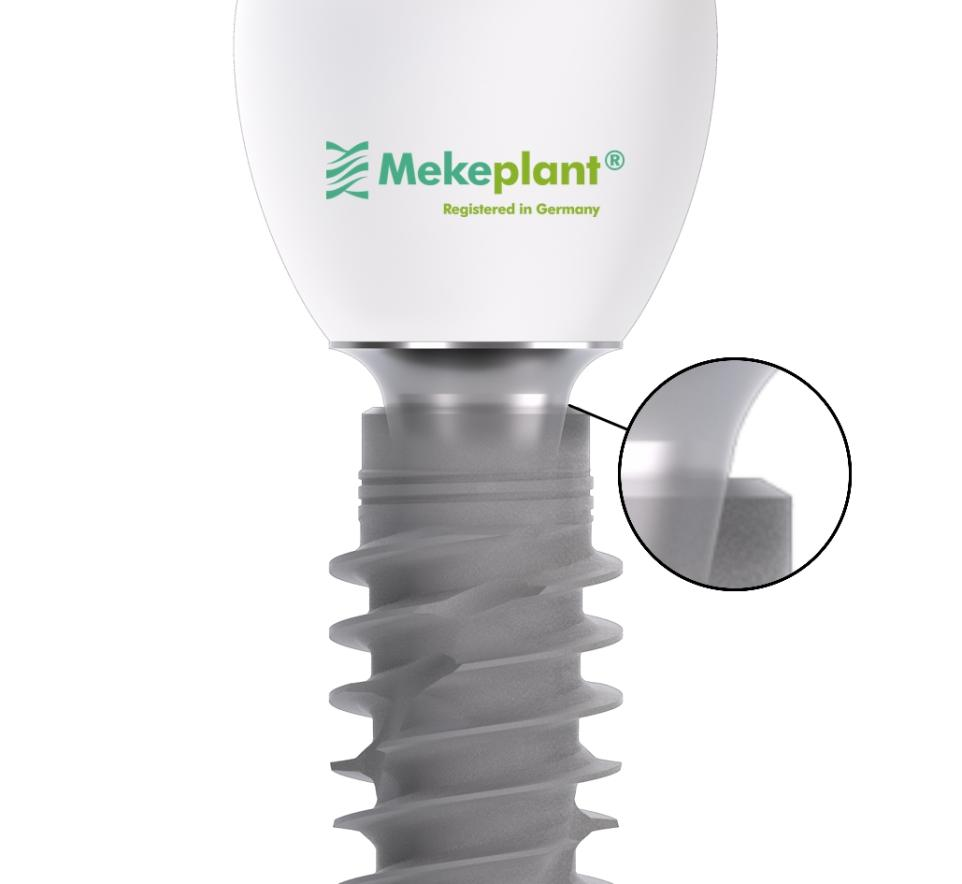
Inward shift of the interface
Three Core Advantages
Preservation of bone volume: By moving the interface inward, the transmission pathway of occlusal loads is altered, so that forces no longer directly impact the cortical bone at the implant neck. This minimises marginal bone resorption and maintains the alveolar bone height around the implant.
Anti‑infection barrier: The inward‑shifted micro‑gap is positioned farther from the bone tissue, reducing bacterial colonisation and subsequent inflammatory destruction of marginal bone. At the same time, the smaller contact area decreases mechanical damage to the bony wall caused by micromotion.
Enhanced aesthetics: When bone tissue is preserved, the gingival papillae are less likely to collapse, thus avoiding the “black triangle” effect. This creates a stable soft‑tissue cuff around the implant, yielding a restoration that closely resembles a natural tooth.
How does Mekeplant® apply this technology?
The Mekeplant® implant system has integrated platform switching with a strong emphasis on interface seal integrity and rational stress distribution. The design aims to establish a highly stable mechanical environment, ensuring long‑term durability of the internal implant structure. By utilising Grade 4 cold‑worked titanium and precision manufacturing techniques, Mekeplant® has internalised platform switching as one of the core strategies to improve implant survival rates, providing clinicians with a robust technical foundation for achieving high‑success restorations.