


Minimally Invasive Implantology and Bone Preservation: Platform Switching Technology
As oral medicine enters an era of minimally invasive and high‑efficiency treatment, dental implants must not only achieve rapid osseointegration but also preserve bone volume over the long term. Without advanced connection technology, minimally invasive procedures are prone to marginal bone resorption at the implant neck due to stress concentration, which can significantly compromise the benefits of the minimally invasive approach. Platform switching technology precisely addresses this shortcoming of minimally invasive implantology in long‑term bone maintenance.
What is platform switching technology?
The term “switching” in clinical practice refers to relocating the micro‑gap between the implant and abutment – which is typically considered the source of bacterial infiltration and micromotion – from its original position at the bone margin to the inner core of the implant. As a result, the crestal bone area, which is most vulnerable to bacterial invasion and occlusal stress, is preserved intact.
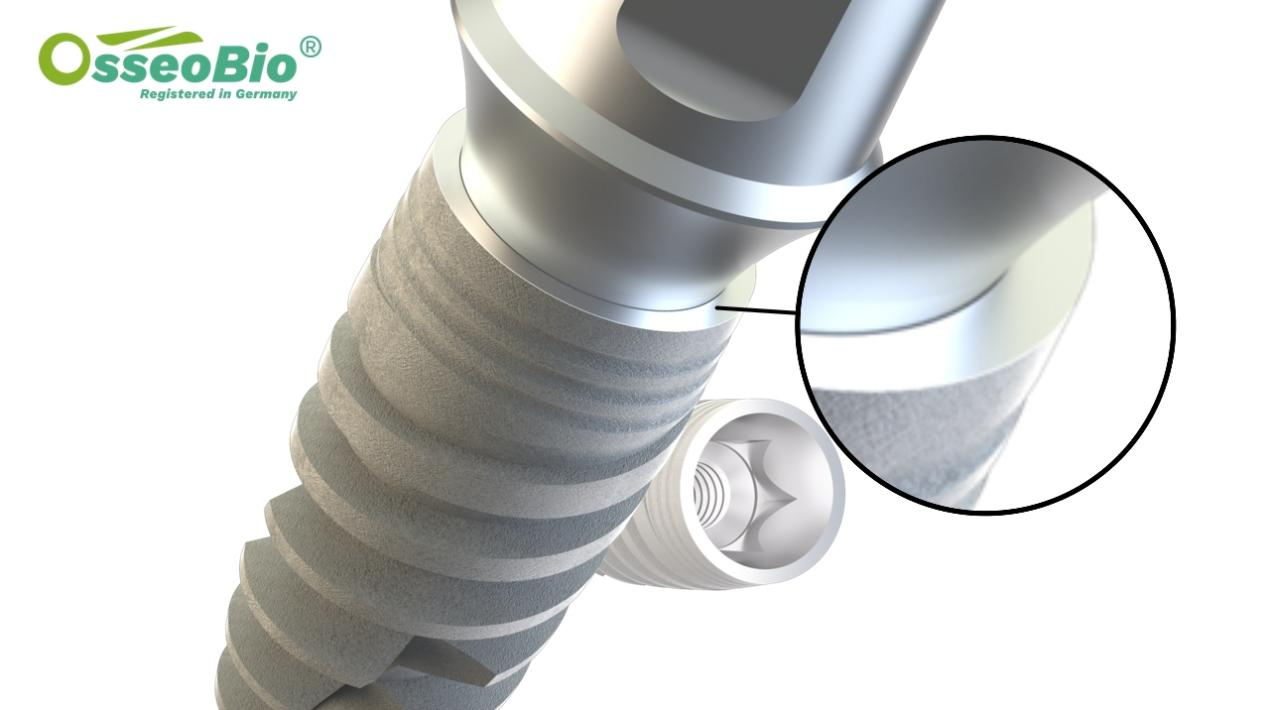
Key Technical Advantages:
Marginal bone preservation: Platform switching provides a “ring‑shaped platform” for bone formation, which facilitates new bone growth and even helps restore the morphology of gingival papillae.
Protection of minimally invasive outcomes: In narrow‑diameter implant cases or patients with insufficient bone volume, platform switching preserves the primary stability by reconstructing the biological width in the horizontal dimension, thereby preventing implant loosening caused by bone resorption.
Promotion of peri‑implant soft tissue health: By preserving the horizontal space required for soft‑tissue attachment, it allows for a thick and healthy connective tissue seal around the implant, further reducing the incidence of peri‑implantitis.
Superior Adaptability of OsseoBio®
The OsseoBio® implant system is specifically optimised for complex bone conditions and minimally invasive indications. The implants feature a narrow‑body design with aggressive self‑tapping threads, compatible with small‑diameter osteotomy drills used in minimally invasive surgery, maximising the preservation of native bone. On this basis, OsseoBio® integrates platform switching technology, providing a solid mechanical foundation for immediate or early loading in narrow or thin bone situations. Furthermore, the use of high‑strength Grade 4 cold‑worked titanium combined with the gold‑standard SLA (sandblasted, large‑grit, acid‑etched) surface treatment creates a synergistic effect with the platform‑switching design. While the high‑strength material ensures fatigue resistance of the thin‑walled implant, the surface technology further promotes osteoblast attachment and bone formation, accelerating the healing cycle. This makes OsseoBio® an ideal solution for minimally invasive implantology that achieves both primary stability and long‑term durability.