

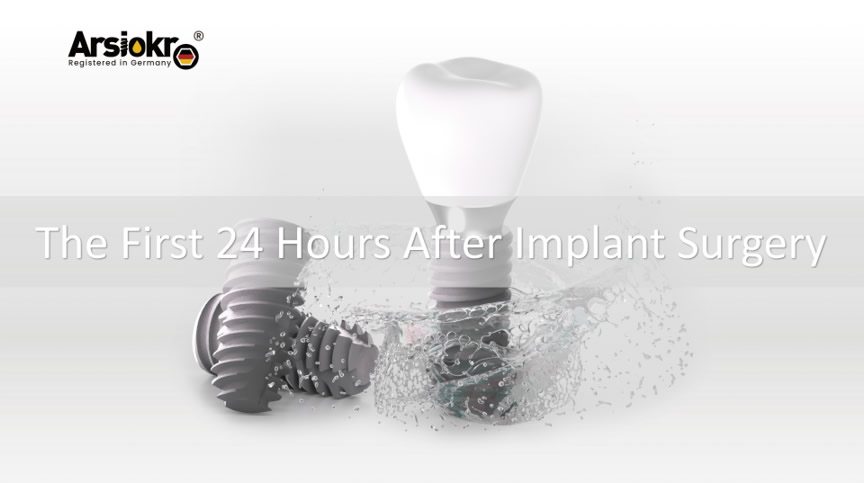
The First 24 Hours After Implant Surgery: Daily Points for Wound Stability
The first day after dental implant surgery is a critical period for hemostasis and blood clot formation at the surgical site. From the day of surgery to the next day, the local tissues are undergoing an early healing response. Whether many subsequent discomforts become obvious is often related to how the site is managed during these twenty-four hours or so. Understanding the physiological characteristics of this stage is more helpful than simply memorizing a list of restrictions.
Before leaving the clinic, the dentist usually asks you to bite on a piece of sterile gauze for local pressure hemostasis. It is generally recommended to keep biting for 30 to 60 minutes and then gently spit out the gauze. Do not frequently release it to check the site, do not repeatedly touch the wound with your tongue, and do not make sucking movements. The blood clot is the basis for early wound closure, and repeated disturbance may dislodge a formed clot and cause re-bleeding. Slight blood-tinged saliva or light pinkish streaks in the saliva after surgery are usually normal and do not require excessive concern. However, if there is heavy bright red bleeding or large clots continue to form in the mouth, contact the dentist promptly.
Swelling and pain often begin at this stage as well. Within 48 hours after surgery, an ice pack wrapped in a towel can be applied intermittently to the face over the surgical area, about 15 minutes at a time, followed by a 15-minute rest before reapplying. The purpose of cold compresses is to reduce local exudation and swelling, not to make the area as cold as possible; avoid frostbite of the skin. If pain is obvious, take analgesics as prescribed. Do not increase the dose on your own or mix multiple medications at will. It should be noted that warm compresses are not recommended early after surgery, because they may dilate local blood vessels and increase exudation and discomfort.
The dietary principle for this day can be summarized as cool, soft, and no direct contact with the surgical site. Cooled milk, yogurt, thin congee, and steamed egg custard are suitable choices. Food should not be too hot or spicy or irritating, and you should chew gently on the side without surgery. Within 24 hours after surgery, brushing, rinsing, touching the wound with the tongue, smoking, and alcohol consumption are not recommended, so as to give the blood clot a relatively quiet environment. Strenuous exercise, staying up late, and prolonged loud speaking should also be temporarily avoided, because these activities may cause local blood pressure fluctuations or pull on the wound and interfere with initial hemostasis.
Another easily overlooked detail is that you should not drink water or beverages through a straw on the day of surgery. The negative pressure produced by a straw can disturb the surgical area and, like repeatedly spitting or forceful rinsing, may affect the stability of the blood clot. If sutures are present, do not pull them with your hands and do not examine the depth of the wound yourself. Doing well with pressure hemostasis, intermittent cold compresses, cool and soft diet, and minimizing disturbance gives subsequent healing a more reliable start.